
A toothache at 11 pm doesn’t wait for clinic hours. Here is what actually helps tonight, what makes it worse, and the signs that mean “go now.”
The 60-Second Answer
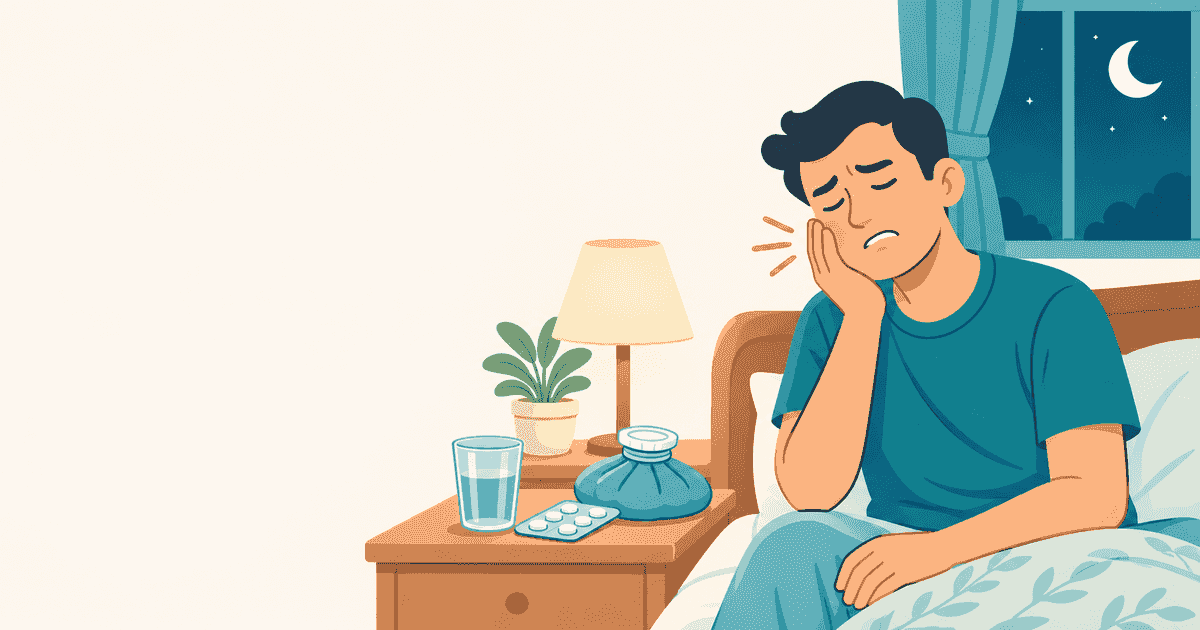
What should you do for a toothache before you can see a dentist? Rinse and floss out trapped food, take a standard painkiller such as ibuprofen or paracetamol only if it is safe for you, exactly as the label says, rinse with warm salt water, and sleep with your head raised. These ease the pain for a few hours. They don't fix the cause.
So arrange a dental appointment promptly: the same day if you have swelling, pus, fever or pain that painkillers do not control, and otherwise as soon as you can (the causes table below shows how fast each type of pain needs a visit). Toothache in Deogarh? Message us on WhatsApp and we'll help you work out how soon to come in.
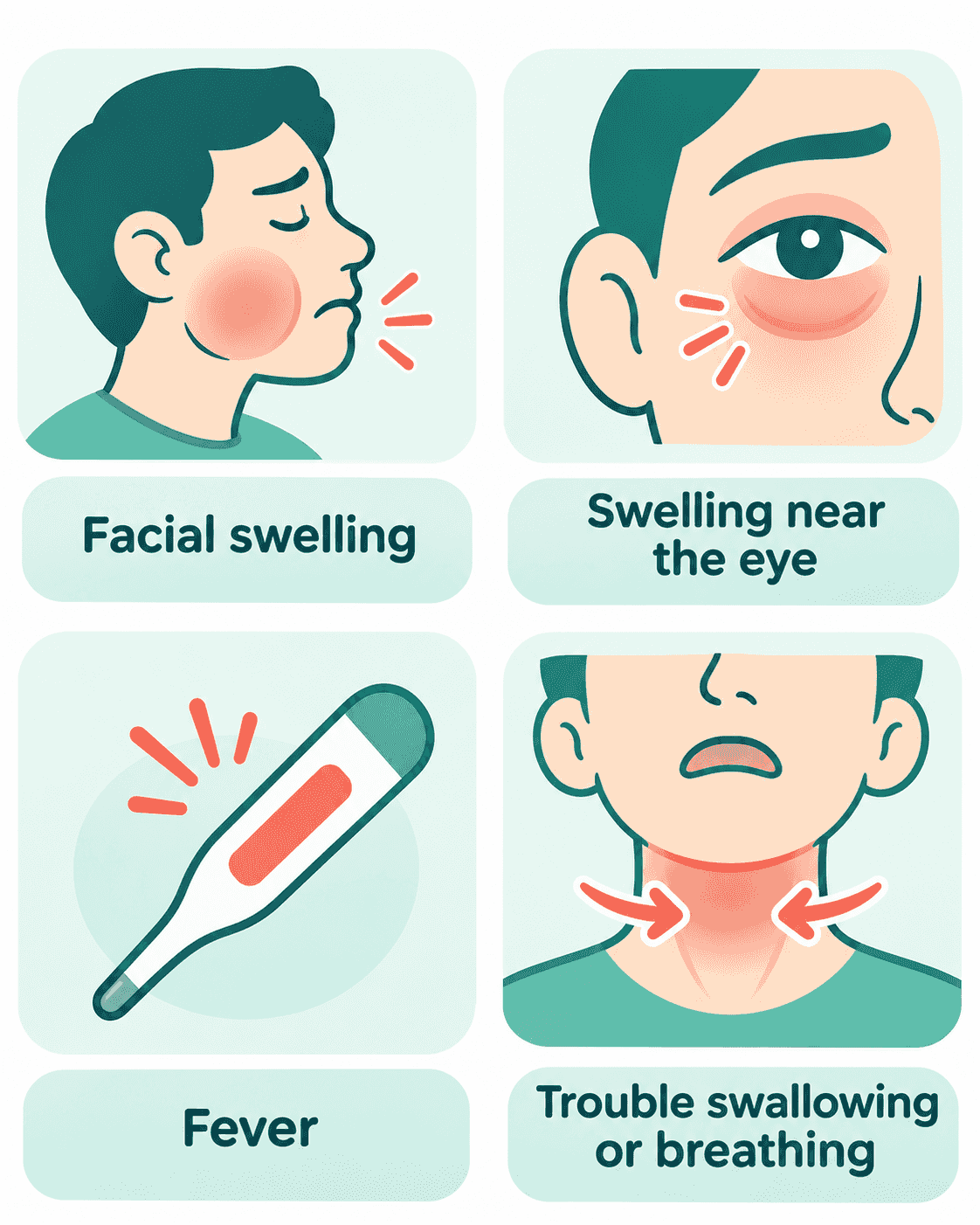
Go to an emergency department straight away if you have spreading facial swelling, swelling closing an eye, or trouble swallowing or breathing.
When is a toothache an emergency?
A toothache is an emergency when it comes with trouble breathing or swallowing, swelling that is spreading or closing an eye, or heavy bleeding. Use this table:
| What you notice | What to do |
|---|---|
| Trouble breathing or swallowing, drooling because swallowing hurts, or swelling that is closing an eye | Emergency department immediately |
| Swelling spreading across the face, jaw or neck, or difficulty opening your mouth with facial swelling | Emergency assessment now |
| Heavy bleeding in the mouth that does not stop with firm pressure | Emergency department |
| Fever with facial swelling, or feeling very unwell, shaky or confused | Urgent: see a dentist at once, or go to the emergency department if you cannot reach one |
| Swelling limited to the gum near one tooth, a gum boil or pus, a bad taste, or pain that painkillers do not control | Dentist the same day |
Why this matters: a tooth infection can spread into the floor of the mouth and neck, where swelling can block the airway. Mayo Clinic advises the emergency room for fever and facial swelling when you cannot reach a dentist, or any trouble breathing or swallowing. NHS Wales says swelling that makes it hard to open your mouth, swallow or breathe, or is closing an eye, needs Accident & Emergency (A&E) care straight away. If you are unsure or getting worse, treat it as urgent.
What might be causing your toothache?
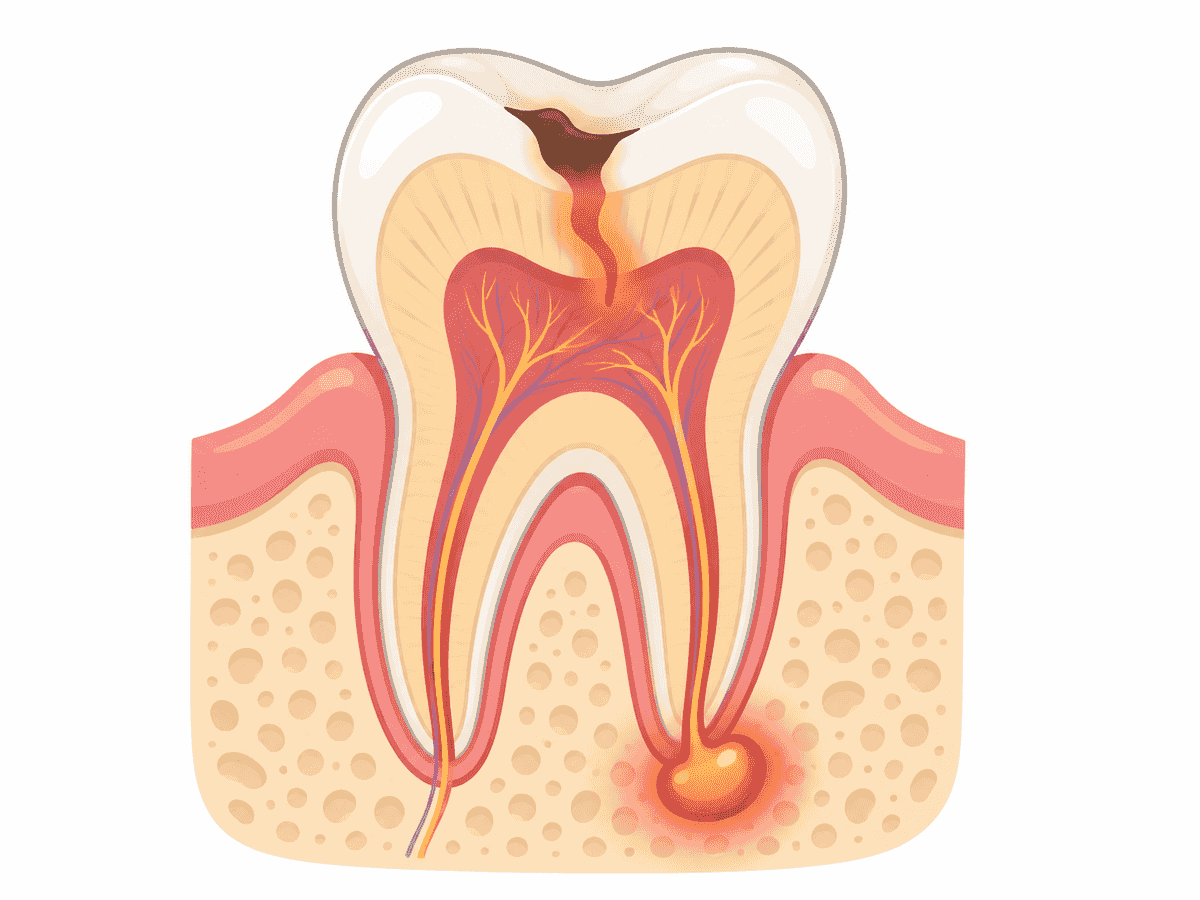
These symptoms are clues, not a diagnosis. Only a dental examination, and sometimes an X-ray, can establish the cause. How it hurts still helps you judge how fast to book.
| How it feels | Possible cause | See a dentist |
|---|---|---|
| Sharp zap with cold, hot or sweet, gone in seconds | Sensitivity, early cavity, exposed root | Within a week |
| Pain only when you bite down or let go | Cracked tooth, loose filling | Within 1 to 3 days |
| Lingering ache after hot or cold, or throbbing that wakes you at night | Deep cavity reaching the nerve | Within 24 to 48 hours |
| Constant throbbing, gum bump or pimple, bad taste, swelling | Tooth abscess (infection) | Same day |
| Dull ache at the very back, swollen gum flap, hard to open wide | Wisdom tooth trouble | Within a day or two |
| Ache in several upper teeth with a blocked nose or cheek pressure | Sinus infection mimicking a toothache | Dentist or doctor, within a few days |
These timeframes are The Tooth Korner’s general guidance, not taken from a clinical guideline. Pain that is getting worse, or any swelling, means you should be seen sooner.
If your pain is the wisdom-tooth kind, read our guide to wisdom tooth extraction and what to expect.
What can I do at home tonight? 4 steps
These steps give temporary relief only. If there is a cavity, crack or infection, it will not get better until a dentist treats it.
-
Clean around the tooth. Rinse with warm water and floss gently along the sore tooth. Trapped food is a common trigger. Do not dig with a pin or toothpick.
-
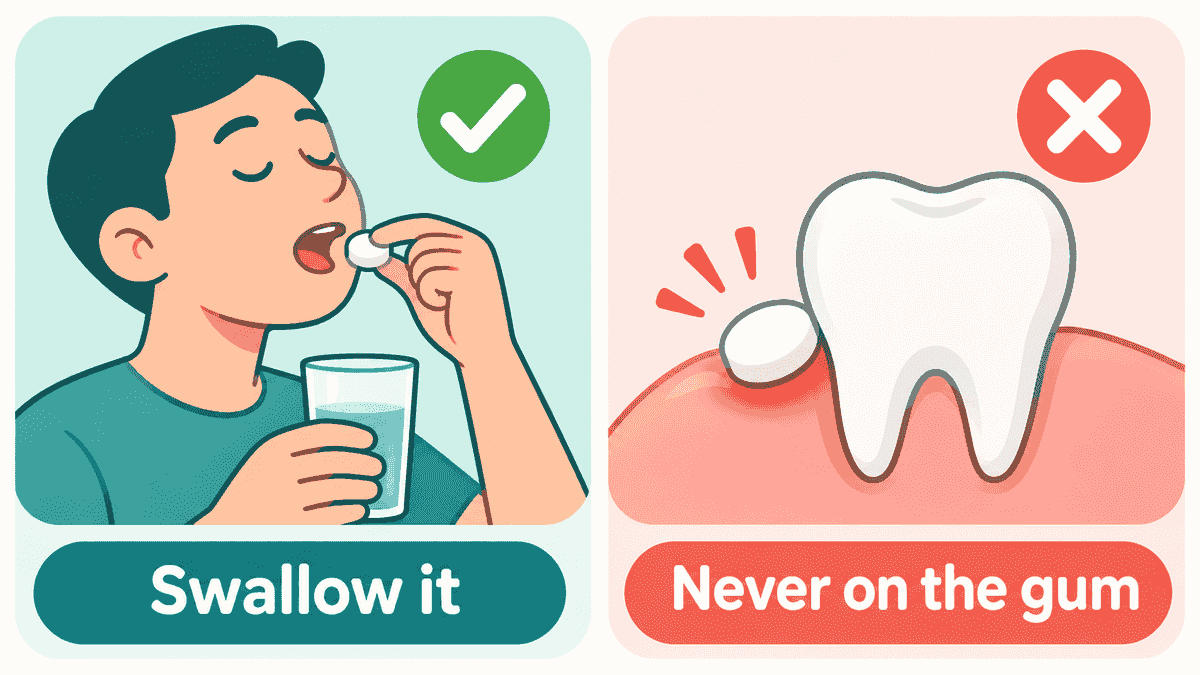
Consider an over-the-counter painkiller. Ibuprofen and paracetamol are the usual choices, and the American Dental Association’s guideline supports ibuprofen or naproxen, alone or together with paracetamol (acetaminophen) for adults and teens 12 and older. The right medicine and amount depend on your age, weight, health and other medicines, so follow the pack label. The ADA also notes that ibuprofen-type painkillers can affect the stomach, kidneys and heart, and that too much paracetamol can harm the liver. Ask a pharmacist or doctor first if you have kidney disease, a stomach ulcer, heart disease or asthma that painkillers trigger, take blood thinners, or are pregnant. Many cold, flu and combination tablets already contain paracetamol, so do not double up. Swallow the tablet. Never place it on the gum. Children need weight-based doses, so ask a pharmacist.
-
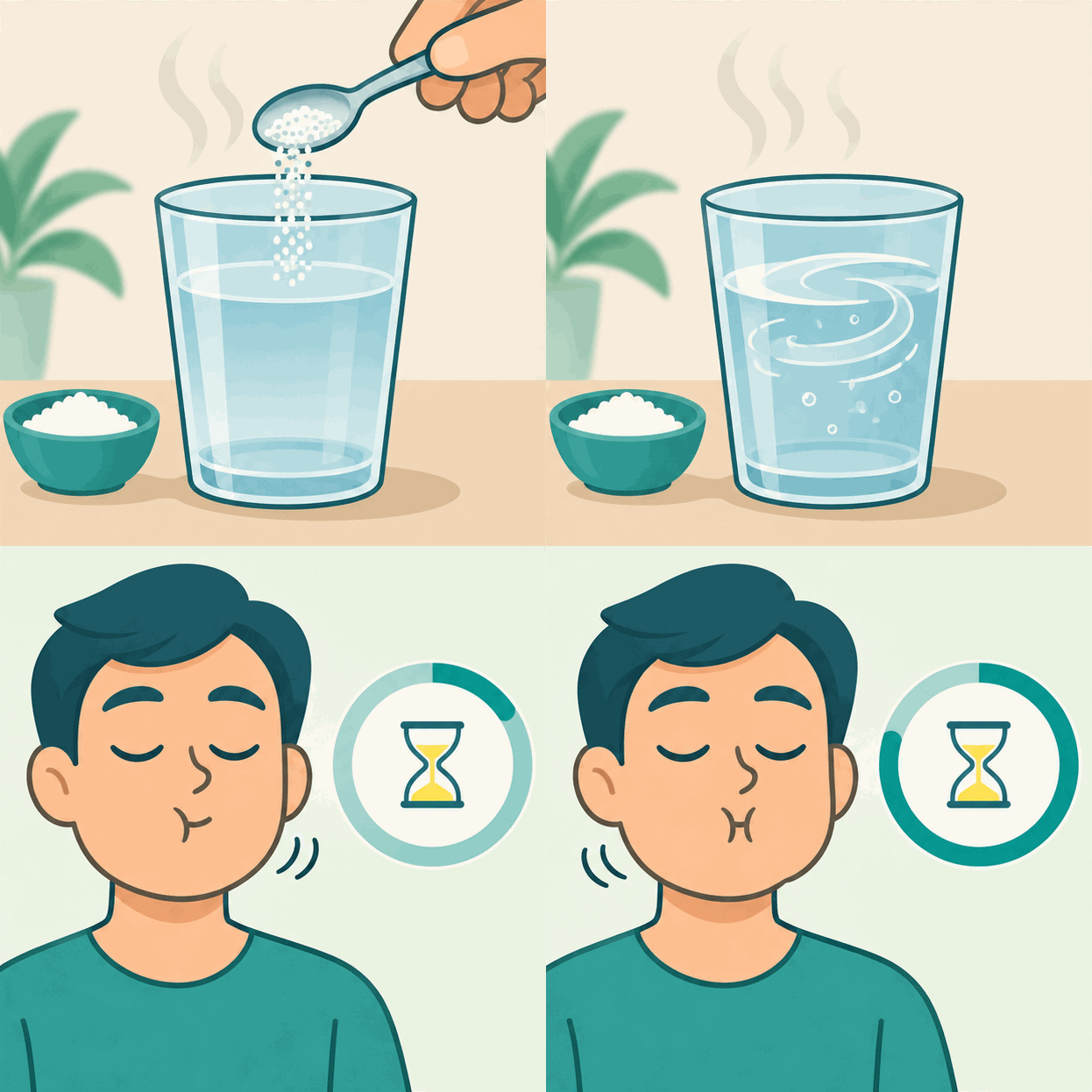
Warm salt-water rinse. Stir half to one teaspoon of salt into a glass (about 250 ml) of warm water. Swish for 30 seconds and spit. Repeat a few times a day. It cleans and soothes. It does not numb.
-
Make the night easier. Prop your head on an extra pillow, chew on the other side, and avoid very hot, cold, sweet or hard food. Skip tobacco and alcohol.

What about clove oil (laung / labanga)? It can numb the gum for a short time, but it is not a cure, and we do not suggest home recipes. The best-known trial (Alqareer et al., 2006) tested clove gel against needle-prick pain in 73 healthy adult volunteers, not toothache. Undiluted clove oil can burn the gum, and it is not suitable for young children, in pregnancy or breastfeeding, or with bleeding disorders. If you want to try it, ask your dentist or pharmacist about a ready-made dental product with printed directions. Never let it delay a dental visit.
Toothache myths, busted
Myth 1: “Put an aspirin on the aching tooth.” False. Aspirin works when swallowed. Held against the gum it dissolves into an acid that can chemically burn the lining of the mouth and leave a painful white sore. This “aspirin burn” has been described in dental case reports since the 1970s (Kawashima 1975; Maron 1989), and a StatPearls clinical review lists it as a chemical burn caused by placing aspirin directly on the mouth lining. A pharmacy-practice article adds that it gives little, if any, relief of the toothache.
Myth 2: “Heat will soothe it.” False. If there is infection, heat can make swelling worse. So do not hold a hot compress or hot water against the cheek. Swelling is a same-day sign: check the emergency table above.
Myth 3: “Antibiotics fix a toothache.” Mostly false. Antibiotics do not cure most causes of toothache. The dentist usually needs to treat the source of the problem, for example with a root canal, drainage or extraction. The ADA’s 2019 guideline recommends against antibiotics for most pulp and root-tip problems in otherwise healthy adults and puts dental treatment first. They may be needed when the infection causes whole-body symptoms such as fever, or in other situations a dentist judges necessary. Never take leftover antibiotics.
Myth 4: “Clove oil cures it.” False. It can numb the surface of the gum for a short time. It does not remove decay, a crack or an infection, so the cause is still there when the numbness wears off. See the clove oil note above for safety cautions.
Myth 5: “The pain stopped, so it healed.” Not necessarily. An abscess can rupture and release pus, which temporarily lowers pressure and pain. Mayo Clinic lists a sudden rush of foul-tasting fluid with pain relief as a sign of rupture. The infection can remain, and usually the only cure is dental treatment.
Myth 6: “Rub tobacco or mishri on the tooth or gum.” False. It is not a toothache remedy, and it harms the mouth. Never pop, cut or squeeze a gum boil either.
Mishri (roasted, powdered tobacco sold as a tooth powder) and other tobacco rubbed on the teeth and gums is smokeless tobacco applied straight to the gum lining. India’s health ministry institute reports that smokeless tobacco products contain potent carcinogens such as nitrosamines and benzo[a]pyrene, and Indian clinic studies of smokeless tobacco users, such as Hallikeri 2018, examine the mouth lesions and precancerous changes linked to the habit.
Quick checklist for tonight
- Check the emergency signs first: trouble breathing or swallowing, spreading swelling, or swelling closing an eye means the emergency department now.
- Rinse and floss gently around the tooth.
- Take a painkiller only if it is safe for you, as the label says. Swallow it.
- Warm salt-water rinse.
- Head raised, chew on the other side, no tobacco or alcohol.
- Book a dentist for tomorrow. Do not wait for the pain to “go away.”
What will the dentist actually do?
The dentist finds the cause, then removes it. That is why the pain stops for good, and why waiting rarely helps.
- Examine and X-ray the tooth. Your dentist asks about your pain, checks the tooth and gums, taps or presses on the tooth, and usually takes an X-ray to find the source.
- Treat the cause: remove decay and place a filling, do a root canal if the nerve is infected, repair or remove a cracked tooth, or drain an abscess.
- Pain control first. Numbing makes the visit comfortable. Often the first goal is simply to stop the pain.
The chair of the ADA’s antibiotic guideline panel compares a root canal to removing a small infected splinter (Reuters): once the source is gone, the infection has nothing left to feed on.
Related reading: why your gums bleed when you brush and how to brush your teeth correctly to keep the next toothache away.
Who needs extra care?
Children, older adults, pregnant women and people with long-term conditions (for example kidney, heart or stomach problems, or anyone taking blood thinners) can need different advice. See a dentist promptly, and ask a doctor or pharmacist before giving or taking any painkiller or home remedy. A child’s dose is set by weight, not age, and never by an adult dose.
Frequently Asked Questions
How long can I wait to see a dentist with a toothache? Arrange an appointment promptly. Most toothaches should be seen within one to three days, and brief sensitivity to cold or sweets can wait up to a week but still needs checking. Swelling, pus, a bad taste, fever, or pain that painkillers do not control means the same day.
When is a toothache an emergency? Go to an emergency department straight away if you have trouble breathing or swallowing, swelling spreading across the face, jaw or neck, or swelling closing an eye. A tooth infection can spread into the neck and block the airway. See a dentist the same day for swelling near one tooth, pus, a bad taste, fever, or pain that painkillers do not control.
Can I take ibuprofen and paracetamol together? Many healthy adults do, and the ADA guideline supports ibuprofen or naproxen alone or combined with paracetamol. But ibuprofen is not safe for everyone, so ask a pharmacist or doctor first if you have kidney disease, a stomach ulcer, heart disease, asthma that painkillers trigger, take blood thinners, or are pregnant. Follow the pack, stay under its daily limit, and do not add a second paracetamol on top of a combination tablet.
What is the fastest way to stop a toothache at night? Combine a correctly taken painkiller, a warm salt-water rinse and a raised head. Nothing at home removes the cause, so book a dentist for the next day.
Can a toothache go away on its own? The pain may ease, but decay, a crack or an infection stays. A dental abscess does not heal without dental treatment.
What if the patient is a child or pregnant? See a dentist promptly. For children, the ADA-endorsed guideline supports paracetamol or ibuprofen as directed, but doses depend on weight, so ask a pharmacist or doctor. In pregnancy, check with your doctor before any painkiller or clove oil, and do not skip the dental visit.
Sources
- ADA: Acute pain management, toothache (living guideline; last evidence search July 2026)
- ADA: Oral analgesics for acute dental pain
- Lockhart PB, et al. Evidence-based clinical practice guideline on antibiotic use for the urgent management of pulpal- and periapical-related dental pain and intraoral swelling. J Am Dent Assoc 2019;150(11):906-921
- Alqareer A, Alyahya A, Andersson L. The effect of clove and benzocaine versus placebo as topical anesthetics. J Dent 2006;34(10):747-750
- Mayo Clinic: Tooth abscess
- NHS Wales: Swelling of the mouth or face
- NI Direct: Dental abscess
- Reuters via Al-Ahram: Dentist group says antibiotics not needed for most toothaches
- Maron FS. Mucosal burn resulting from chewable aspirin: report of case. J Am Dent Assoc 1989;119:279-280
- Kawashima Z, Flagg RH, Cox DE. Aspirin induced oral lesion: report of a case. J Am Dent Assoc 1975;91:130-131
- StatPearls: Physical and chemical lesions of the oral mucosa (updated January 2025)
- Pharmaceutical Journal: Oral ulceration, causes and management
- WHO FCTC: Smokeless tobacco products in India (includes mishri)
- NIHFW, Ministry of Health and Family Welfare: Evidence assessment of harmful effects of gutkha, tobacco and pan masala
- Hallikeri K, et al. Prevalence of oral mucosal lesions among smokeless tobacco usage: a cross-sectional study. Indian J Cancer 2018;55(4):404-409
Background reading (consumer sites, not clinical sources):
- Colgate: Homemade toothache remedies
- Dentaly: Home remedies for toothache
- MedBound Times: Common dental myths
This article is educational and does not replace an in-person examination. Which medicine suits you, and how much, depends on your age, weight, health and other medicines, so follow the pack and ask a doctor or pharmacist if unsure.
Toothache in Deogarh? Book a dental examination
Home care is a bridge, not a cure. A dental examination can show whether the cause is decay, an infection, a cracked tooth or something else. Contact The Tooth Korner, Debagada, Deogarh, Odisha, to ask about appointment availability.
- WhatsApp: message us on WhatsApp
- Phone: +91 99376 57706
- Hours and location: see our contact page
If you have trouble breathing or swallowing, or swelling that is spreading or closing an eye, go to a hospital emergency department instead of waiting for a clinic appointment.