
Most bleeding when you brush isn’t dangerous — but knowing which kind is the whole point.
The 60-Second Answer
Light bleeding when you brush is common and usually not serious — it's typically gingivitis (early, reversible gum inflammation from plaque buildup) or brushing too hard with a stiff brush.
It's normal if: it's mild, tied to a specific spot, or you just started flossing again — and it fades within a week of gentle, consistent brushing.
It's a red flag if: it happens most days, comes with swollen or puffy gums, or shows up even when you're not brushing at all. That's worth a dentist visit, not a wait-and-see.
We covered the “stop brushing there” myth in our brushing technique guide — this post goes further into why the bleeding happens in the first place, and how to tell ordinary from concerning.
The 5 Real Causes, Ranked
Bleeding gums have a short list of real causes. Here they are, roughly in order of how often we actually see them.
1. Plaque buildup / gingivitis The most common cause by far. Plaque sitting at the gumline irritates the tissue, and inflamed tissue bleeds easily — even from a soft-bristled brush. This is a disease process, but an early and fully reversible one.
2. Brushing too hard, or a hard-bristled brush This is mechanical trauma, not disease. If bleeding shows up in the same one or two spots every time — usually wherever you press hardest — this is the likely cause, not gingivitis.
3. Starting to floss again after a long gap Gums that haven’t been flossed in a while are more sensitive and bleed for the first several days. This settles on its own as the tissue toughens up — usually within a week — as long as you keep flossing gently rather than stopping.
4. Pregnancy hormones Very common, and not a sign anything’s wrong with your hygiene. Hormonal changes make gums more reactive to the same amount of plaque, and it affects a large majority of pregnant women to some degree. It typically eases after delivery, though it’s still worth mentioning at a prenatal dental check.
5. Medications and health conditions A shorter list, but worth a brief mention: blood-thinning medication, vitamin C or K deficiency, and diabetes can all cause or worsen gum bleeding. If gentle brushing and flossing alone don’t explain it, this is where to look next — with your doctor or dentist, not by guessing.
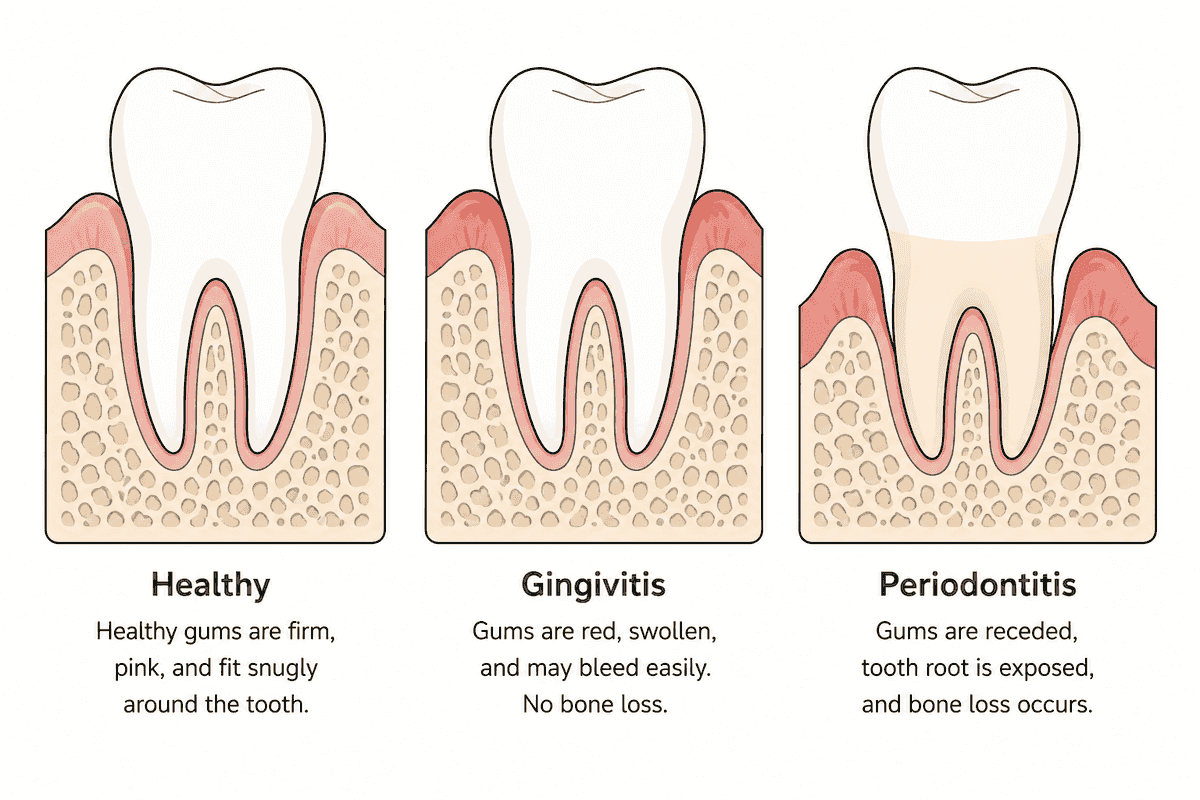 Healthy gum vs. gingivitis vs. periodontitis — bleeding usually shows up at the gingivitis stage, while it’s still fully reversible.
The Self-Check: Normal or Red Flag?
Use this to place what you’re seeing before deciding what to do about it.
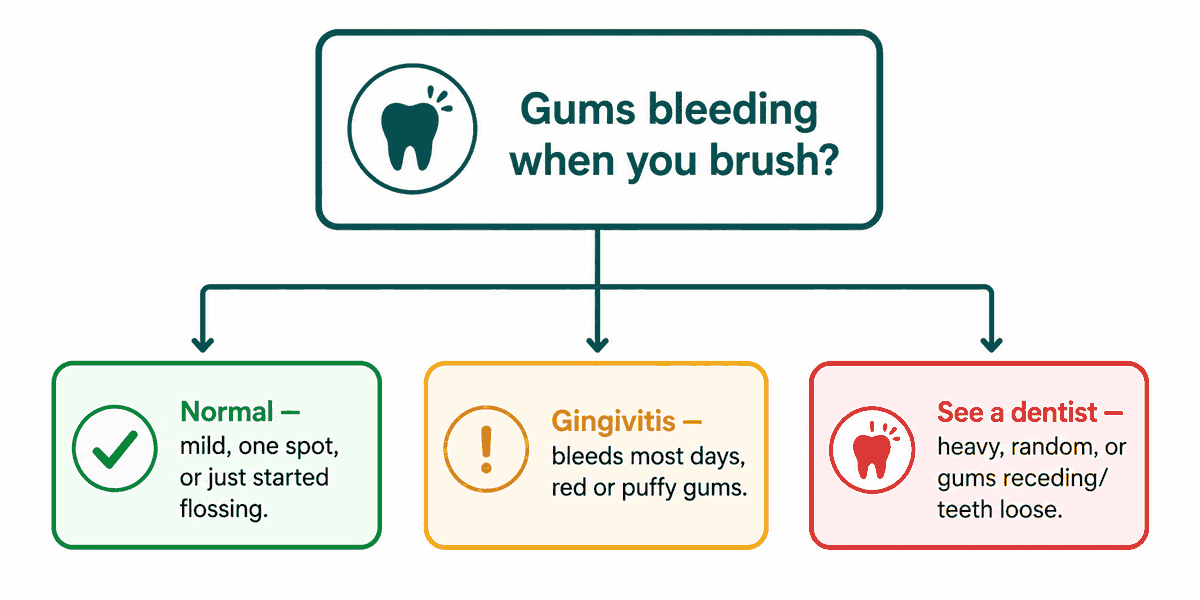
| What you’re seeing | What it likely means |
|---|---|
| Bleeds a little, only in the spot you brush hardest, or you just started flossing again | Normal. Should stop within a week of gentle, consistent care. |
| Bleeds most days, gums look red, swollen, or puffy, breath is often bad too | Gingivitis — a real but fully reversible condition. |
| Bleeds heavily, shows up randomly (not just when brushing), gums are receding, or teeth feel loose | See a dentist soon. This is past the point of home care alone. |
What Actually Fixes It
Most bleeding gums respond to the same handful of changes — the trick is doing them consistently, not harder.
- Switch to a soft-bristled brush and light pressure. Use the 45° technique at the gumline — full walkthrough in our brushing guide.
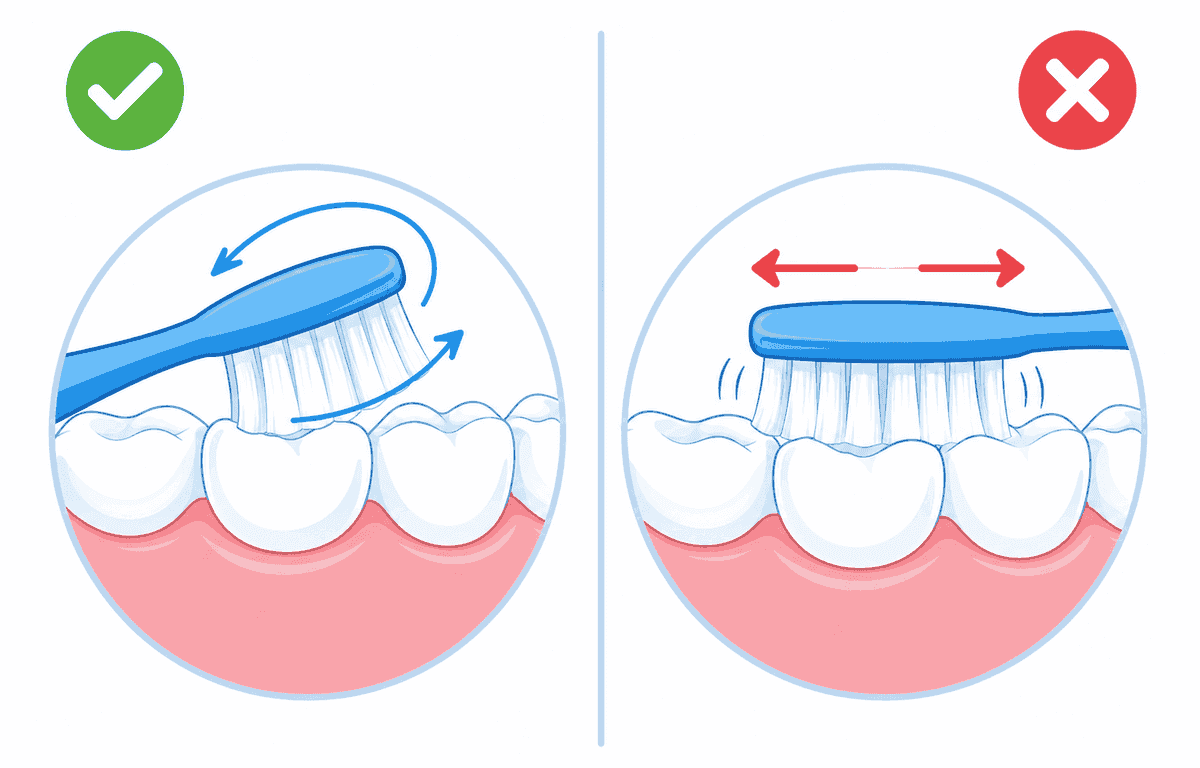
- Floss daily, gently. Bleeding from resuming flossing should ease within a week, not continue past it. If it’s still bleeding after 7–10 days, that’s no longer “just adjusting.”
- Get a professional cleaning. Hardened tartar can’t be brushed off at home — only a scale and polish removes it, and it’s often the missing step when bleeding won’t budge.
- Give it two weeks. When the cause is confirmed gingivitis, it’s fully reversible with about two weeks of consistent gentle brushing and flossing. This isn’t a lifelong condition — it responds fast once the plaque is under control.
Myths — Busted
“Bleeding means you should stop brushing or flossing there.” False — and the opposite of what actually helps. Skipping the area lets plaque build up further, which makes the bleeding worse, not better. Clean it more consistently, just gently.
“Only people with poor hygiene get bleeding gums.” False. Pregnancy and certain medications cause bleeding in people who brush and floss perfectly well. Bleeding gums point to a cause — they’re not automatically a hygiene verdict.
“Bleeding gums are just cosmetic, not serious.” False. Left untreated, gingivitis can progress to periodontitis, which damages the bone and tissue supporting your teeth and can lead to tooth loss. Early bleeding is the easiest stage to fix — that’s exactly why it’s worth acting on.
“Brushing harder removes more plaque and stops the bleeding.” False — same myth we busted in our brushing guide, and it applies here too. Plaque is soft and comes off with light pressure; harder brushing just irritates the gums further and can cause the bleeding it’s meant to fix.
Frequently Asked Questions
Is it normal for gums to bleed a little when I brush? Yes, occasional light bleeding — especially in one spot, or right after you resume flossing — is common and usually resolves within a week of gentle, consistent brushing.
How long should gum bleeding last after I start flossing again? About a week. Gums that haven’t been flossed regularly are more sensitive and bleed at first, then toughen up. If it’s still bleeding after 7–10 days, that’s no longer “just adjusting.”
Can bleeding gums heal on their own? If the cause is gingivitis, yes — it’s fully reversible, usually within about two weeks of consistent gentle brushing, flossing, and a professional cleaning if there’s tartar buildup. It doesn’t reverse itself if you avoid the area instead.
Are bleeding gums a sign of gum disease? They can be the first sign of gingivitis, the earliest and reversible stage of gum disease. Left untreated, gingivitis can progress to periodontitis, which isn’t reversible — that’s why early bleeding is worth addressing, not ignoring.
Why do my gums bleed even though I brush gently? A few common causes outside of brushing pressure: pregnancy hormones, blood-thinning medication, vitamin C or K deficiency, or diabetes. If gentle brushing alone doesn’t explain it, it’s worth mentioning to your dentist.
Sources
Claims in this article are based on published guidance from Cleveland Clinic and Colgate Oral Health on the causes and management of bleeding gums. This article is educational and doesn’t replace an in-person dental evaluation.
When Bleeding Doesn’t Stop
If gums are still bleeding after two weeks of gentle, consistent brushing and flossing — or if you’re seeing swelling, receding gums, or teeth that feel loose — that’s past what home care can fix on its own. Book a checkup at Tooth Korner and we’ll tell you exactly what’s going on, rather than leaving it to guesswork.