Most people have been brushing their teeth wrong their entire lives. Here’s the technique dentists actually recommend — no fluff, just what works.
The 60-Second Answer
If you only remember one thing from this blog, remember this:
Angle your brush at 45° toward your gums, use short gentle strokes, and spend at least 2 minutes, twice a day.
Everything else in this guide just explains why and how to do that properly.
Step-by-Step: The Correct Brushing Technique (Modified Bass Method)
Dentists worldwide recommend the Modified Bass Technique — it’s the gold standard for removing plaque without damaging your gums.
1. Pick the right tools
- Soft-bristled brush (medium/hard bristles wear down enamel and irritate gums)
- Fluoride toothpaste (non-negotiable — more on this below)
- Pea-sized amount of toothpaste (not the toothpaste-ad swirl)
2. Position the brush at 45° Tilt your brush so the bristles point toward your gumline, not straight at the tooth surface. This lets bristles slip slightly under the gum edge where plaque hides.
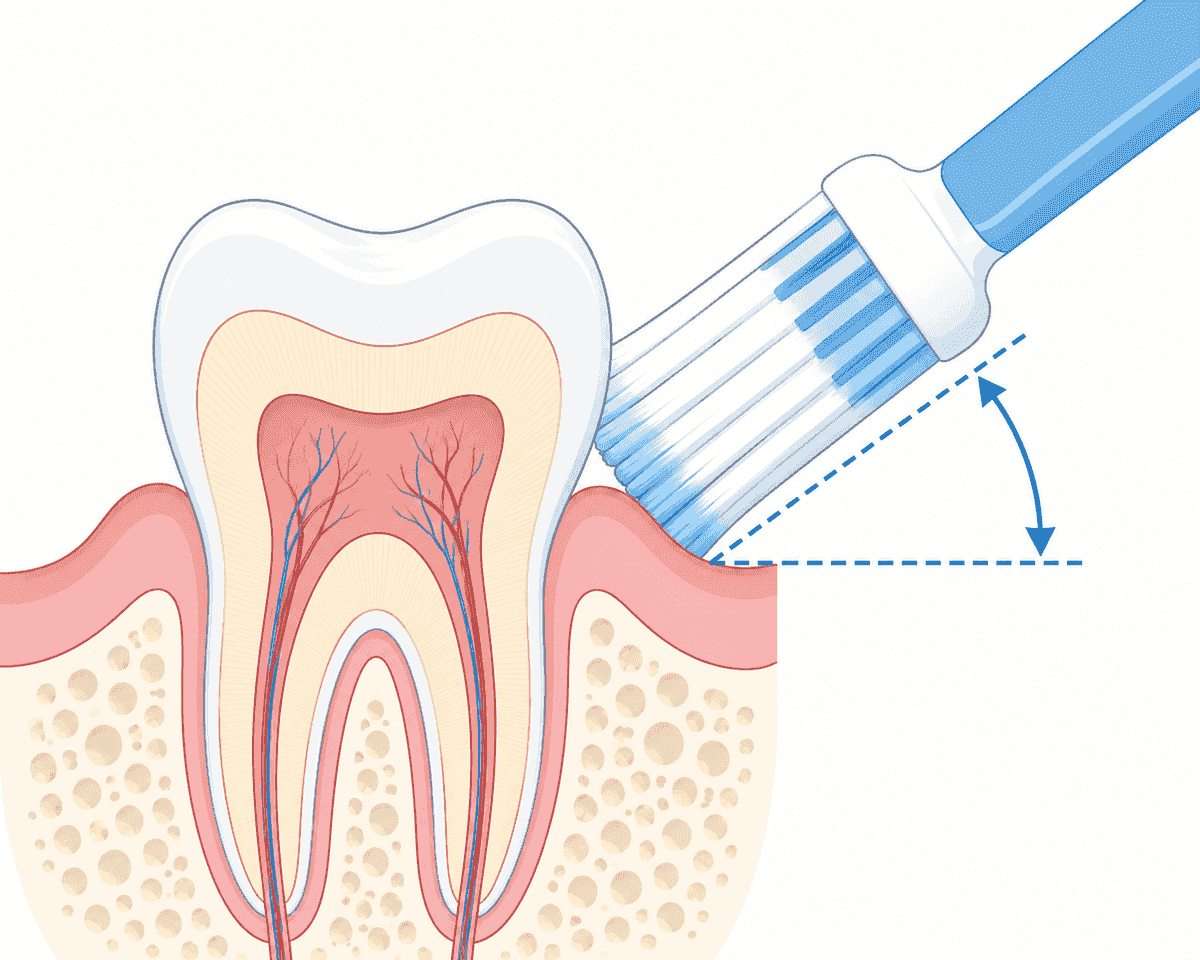
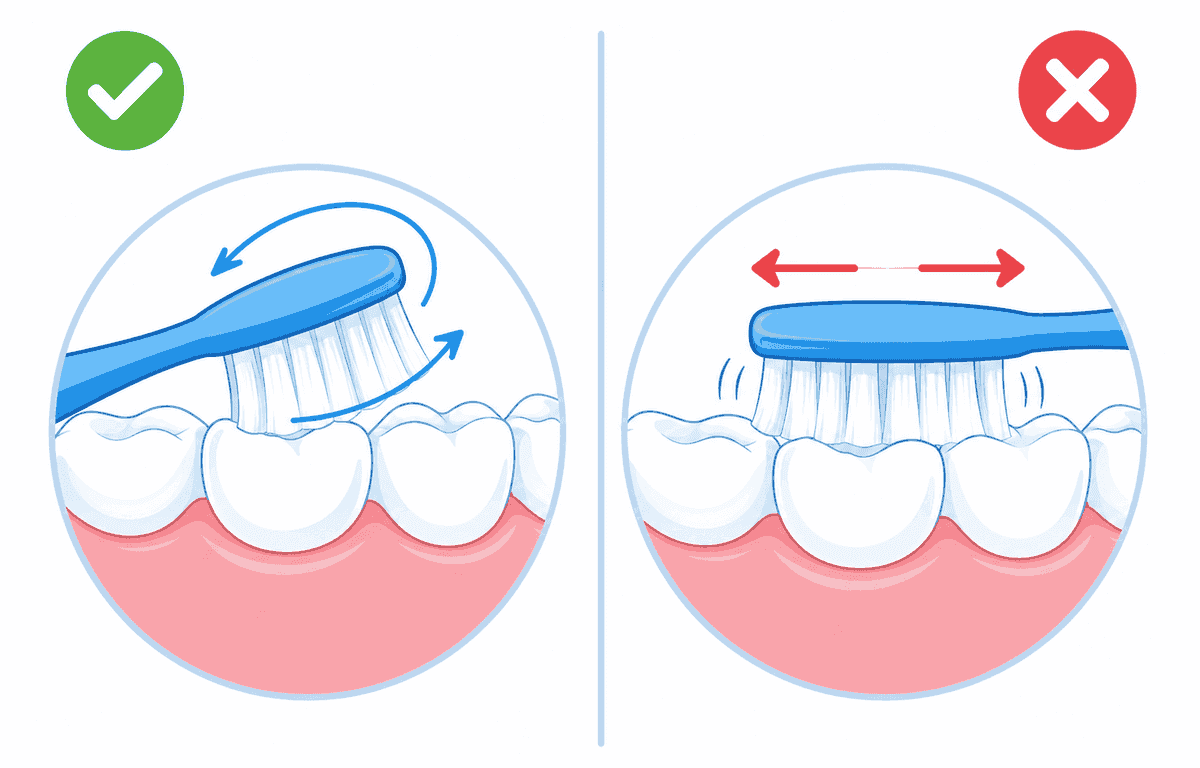
3. Use small, gentle circular or vibrating strokes Don’t scrub side-to-side like sawing wood — this is the #1 mistake and the top cause of receding gums. Instead, use small circles or gentle back-and-forth vibrations, covering 2-3 teeth at a time.
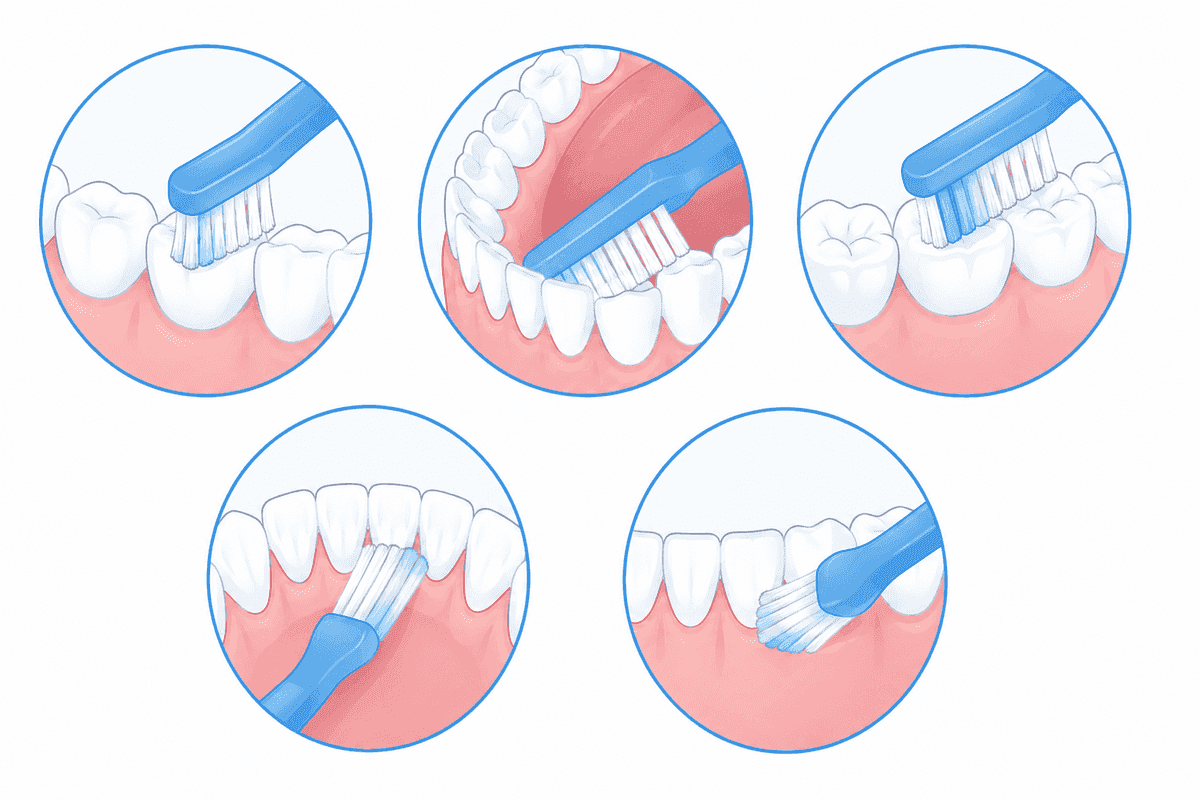
4. Cover all five surfaces, in order (so you don’t skip any)
- Outer surfaces (cheek-side) — all upper, then all lower
- Inner surfaces (tongue-side) — often the most neglected
- Chewing surfaces — flat, back-and-forth strokes
- Behind the front teeth — tilt the brush vertically and use up-down strokes
- Along the gumline — a few extra seconds here matters most
5. Brush your tongue Bacteria coating your tongue is a leading cause of bad breath. Gently brush or scrape front-to-back.
6. Spit, don’t rinse (immediately) Spit out the excess but avoid rinsing with water right after. This lets the fluoride stay on your teeth longer and keep protecting them.
The 4 Numbers That Actually Matter
| Factor | Scientifically Backed Recommendation |
|---|---|
| Duration | 2 minutes minimum, both sessions |
| Frequency | 2x daily (morning + before bed) |
| Pressure | Light — brush should not visibly bend |
| Replacement | Every 3 months, or sooner if bristles fray |
Brushing longer than 2 minutes doesn’t add much benefit. Brushing harder doesn’t clean better — it just wears away enamel and pushes gums back.
Common Myths — Busted
Myth: “Brushing harder cleans better.” False. Plaque is a soft, sticky film — it comes off with light pressure. Hard brushing mainly damages enamel and gum tissue over time, leading to sensitivity and recession.
Myth: “Brush right after every meal.” False, especially after acidic foods/drinks (citrus, soda, wine). Acid softens enamel temporarily; brushing immediately can scrub away softened enamel. Wait about 30 minutes, or just rinse with water instead.
Myth: “Mouthwash can replace brushing.” False. Mouthwash freshens breath and can reduce bacteria, but it doesn’t mechanically remove plaque stuck to tooth surfaces. It’s a supplement, never a substitute.
Myth: “Natural/charcoal toothpaste is better than fluoride toothpaste.” Not supported by evidence. Fluoride is one of the most researched and effective cavity-prevention ingredients in dentistry. Charcoal toothpaste can even be abrasive enough to damage enamel with regular use.
Myth: “Bleeding gums while brushing means you should brush less.” Opposite is usually true. Bleeding is commonly an early sign of gingivitis caused by plaque buildup — the fix is more consistent, gentle brushing and flossing, not avoidance. (If bleeding persists beyond 1-2 weeks of proper brushing, see a dentist.)
Myth: “Bigger, harder-bristled brush = deeper clean.” False. Bristle stiffness doesn’t reach deeper than soft bristles — it just increases risk of gum injury. Technique matters far more than brush stiffness.
Bonus: Don’t Forget These
- Floss thrice a week — brushing alone misses ~40% of tooth surfaces (the sides between teeth).
- Replace your brush after illness to avoid reinfection.
- Electric brushes are proven to remove slightly more plaque than manual ones for most people, mainly because they make consistent technique easier — not because of magic technology.
- See a dentist every 6 months, even with perfect technique, for scale, polish, and early detection of issues brushing can’t catch.
Quick Recap Checklist
- Soft-bristled brush + fluoride toothpaste
- 45° angle at the gumline
- Small circular strokes, not scrubbing
- All 5 surfaces, including tongue
- 2 minutes, 2x a day
- Spit, don’t rinse
- Floss thrice a week
- New brush every 3 months
- Dentist visit every 6 months
Have a specific dental concern — sensitivity, bleeding gums, or bad breath that won’t go away? That’s worth a conversation with your dentist rather than a Google search.